

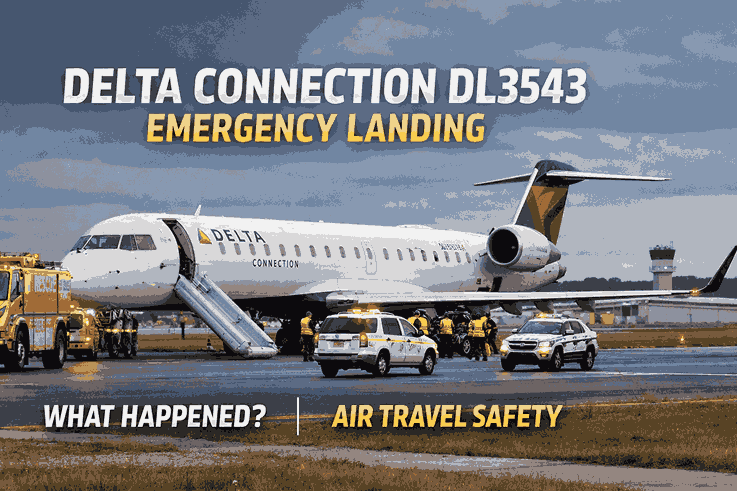

Air travel is widely regarded as one of the safest modes of transportation. However, when incidents like the Delta Connection DL3543 emergency landing occur, they naturally raise concern among passengers and industry observers. While such situations can seem alarming, they also highlight the effectiveness of aviation safety protocols and the professionalism of flight crews.
In this article, we’ll take a detailed look at the Delta Connection DL3543 emergency landing, what may have caused it, how such situations are handled, and what it means for passengers.
What Is Delta Connection DL3543?
Delta Connection flights are regional services operated on behalf of Delta Air Lines by partner carriers. Flight DL3543 is one such regional route, typically operated using smaller aircraft designed for short to mid-range travel.
These flights connect smaller cities to major hubs, playing a crucial role in the airline’s network. While they may not receive as much attention as long-haul flights, they adhere to the same strict safety standards.
Overview of the Emergency Landing
The Delta Connection DL3543 emergency landing refers to an incident in which the flight was forced to land unexpectedly due to a technical or safety-related issue.
Key Highlights:
-
The aircraft declared an emergency mid-flight
-
Pilots followed standard aviation emergency protocols
-
The plane landed safely without major injuries
-
Emergency response teams were prepared upon landing
Although the exact cause can vary depending on the specific incident, emergency landings are typically precautionary measures rather than signs of catastrophic failure.
Common Reasons for Emergency Landings
To better understand the Delta Connection DL3543 situation, it’s helpful to know why emergency landings happen in general.
1. Mechanical Issues
Aircraft are highly complex machines. Even minor technical irregularities—such as engine warnings or hydraulic system issues—can prompt pilots to land as a precaution.
2. Medical Emergencies
Sometimes, a passenger or crew member may experience a serious health issue requiring immediate medical attention on the ground.
3. Weather Conditions
Sudden changes in weather, such as severe turbulence, thunderstorms, or low visibility, can force a diversion or emergency landing.
4. Cabin Pressure Problems
Loss of cabin pressure is rare but serious. In such cases, pilots descend quickly and land at the nearest safe airport.
5. Unusual Smells or Smoke
Reports of smoke or burning odors inside the cabin or cockpit are treated with utmost seriousness.
What Happened During the Delta Connection DL3543 Emergency Landing?
While specific details may vary depending on reports, a typical emergency landing scenario like DL3543 follows a structured process:
1. Issue Detection
The pilots or onboard systems detect an abnormal condition—this could be a warning light, unusual noise, or system alert.
2. Communication with Air Traffic Control
Pilots immediately inform air traffic control (ATC) and may declare an emergency. This gives them priority clearance to land.
3. Passenger Safety Measures
Flight attendants prepare the cabin:
-
Instruct passengers on safety procedures
-
Secure loose items
-
Ensure seatbelts are fastened
4. Controlled Landing
Pilots guide the aircraft to the nearest suitable airport, focusing on a safe and controlled descent.
5. Emergency Response
Fire crews, medical teams, and airport staff are positioned on standby as the aircraft lands.
How Safe Are Emergency Landings?
Despite the concern they generate, emergency landings are often carried out safely.
Important Facts:
-
Modern aircraft are designed with multiple backup systems
-
Pilots undergo extensive simulator training for emergencies
-
Aviation authorities enforce strict safety regulations
-
Most emergency landings end without injuries
In fact, declaring an emergency is often a proactive safety decision—not a sign that something has gone seriously wrong.
Passenger Experience During an Emergency Landing
For passengers on Delta Connection DL3543, the experience may have been stressful but controlled.
What Passengers Typically Notice:
-
Announcements from the captain explaining the situation
-
Calm but firm instructions from the crew
-
A quicker-than-normal descent
-
Emergency vehicles visible upon landing
Airlines train their staff to keep passengers informed and calm, minimizing panic during such events.
The Role of Crew Training
One of the key reasons incidents like the Delta Connection DL3543 emergency landing end safely is rigorous crew training.
Pilot Training Includes:
-
Simulated emergency scenarios
-
Decision-making under pressure
-
System troubleshooting
-
Emergency landing procedures
Cabin Crew Training Includes:
-
Passenger management
-
First aid and medical response
-
Evacuation procedures
-
Communication techniques
This training ensures that even unexpected situations are handled professionally.
What Happens After the Landing?
Once the aircraft has landed safely, several steps follow:
1. Passenger Assistance
Passengers may be:
-
Provided medical checks if needed
-
Rebooked on alternative flights
-
Given accommodation or compensation
2. Aircraft Inspection
Maintenance teams thoroughly inspect the aircraft to identify and fix the issue.
3. Investigation
Aviation authorities and the airline conduct a detailed review to determine the cause.
4. Safety Improvements
If necessary, procedures or systems are updated to prevent similar incidents in the future.
Lessons from the Delta Connection DL3543 Emergency Landing
Incidents like this provide valuable insights into aviation safety.
Key Takeaways:
-
Emergency landings are precautionary and often prevent bigger problems
-
Aviation systems are designed with multiple safety layers
-
Crew training plays a critical role in passenger safety
-
Transparency and investigation improve future safety
Rather than being a sign of danger, such events demonstrate how well-prepared the aviation industry is.
Should Passengers Be Concerned?
It’s natural to feel uneasy when hearing about an emergency landing. However, statistics consistently show that air travel remains extremely safe.
Why You Shouldn’t Worry:
-
Incidents are rare compared to the number of daily flights
-
Safety protocols are highly effective
-
Airlines prioritize passenger well-being above all else
-
Continuous monitoring and improvements enhance safety
The Delta Connection DL3543 emergency landing is an example of safety systems working exactly as intended.
Final Thoughts
The Delta Connection DL3543 emergency landing serves as a reminder of both the unpredictability of air travel and the strength of modern aviation safety systems. While the word “emergency” can sound alarming, the reality is that such situations are handled with precision, training, and care.
Passengers can take comfort in knowing that every aspect of aviation—from aircraft design to crew training—is built around one primary goal: safety.
As air travel continues to evolve, incidents like this help reinforce trust in the systems that keep millions of passengers safe every day.

